Friday, 5 April 2013

At least two minds

LETTER TO H

I am having pangs of guilt about my life style in general and my writing style in particular.

I am in at least two minds about the new style of writing.

On the upside it allows thoughts, feelings and moods to arise out of the unconscious that would otherwise be rejected because of lack of supporting evidence. That is in theory. In practice most of the habitual taboos are still in place! 

On the downside I am not planning my writing in advance and directing efforts towards gathering evidence. And I have stopped using footnotes. By my old professional standards I am sloppy, lazy and self indulgent. I used to herd other people’s cows but now I attend to my own idiosyncratic one.

BUT - I find it strangely mysterious and enjoyable.

A word or phrase captures attention and I begin writing. One sentence follows another and so for paragraphs. I am rarely aware of where the overall story is going but there are often numinous and wordless flashes preceding the next set of words.

This is the ‘muse’ in action. But she is often verbose, inelegant and in need of editing. Evolution is a tinkerer. The unconscious is good enough to ensure survival but it falls short of design perfection.

There are pauses. Ideas stop coming. So I make coffee or wash dishes. The unconscious whirrs and, when I sit back at the computer, there are new ideas to write about.

I am hooked on the notion of the one-pager. When I am near the end of the page there is thought of rounding up – often by having the closing sentence refer back to the opening one. But if I go over the first page I let more ideas turn up and aim to finish at the bottom of the second page.

Then there is titling and editing. It is best to leave the title till last so it can refer truly to what is written. I am fairly disciplined about the editing. It is enjoyable cutting out unnecessary words and breaking up long sentences so the prose flows. After the first session of editing I leave it for a while and then read it again. I know it is ready for publishing when there is an editing session without changes.

These days I publish most of the stories to a blog. There is often some extra paragraphing to cut down the density of the text. I also search Google images for some apt graphics which (a) make the page more visually attractive and (b) add non-verbal support to the message.

SO – there are pangs of guilt. It is too easy – no pain, no gain. I feel as if I am getting something from nothing. This is both unfair and impossible. I have done nothing to deserve such rich pickings. It is the devil’s work – he tempts me into selfish self indulgence. I SHOULD be more humble, hard working, law abiding and ordinary. Keep my head below the dyke.

BUT - I have seen further. I have seen the intangible ‘I’ as the rational despot of consciousness. He is perched on the tiny tip of the iceberg which is the consilient despot of unconsciousness.

The mind has many minds of its own. They are part of the ongoing vital churn that is the Oneness with many manifestations. My ‘I’, both conscious and unconscious, is rooted in my nature (genes), nurture (enculturation) and serendipity (luck).

I had a standard initial Scottish Presbyterian enculturation – God the Father and respect for the elders and betters with their dogmatic institutional religion.

But I partly grew out of that and drifted into appreciating a godless, purposeless vital churn of stardust that became conscious of itself on planet earth between the birth and death of its sun.

On a good day I know this to be a liberating viewpoint.

Wednesday, 3 April 2013

Miracles yes and no

I am hard wired to believe in miracles but I am culturally programmed to poo poo them. So, depending on my mental mood in a given moment, I am or am not a believer.

Fan Heater
I noticed the ambivalence when I realized that my hands were cooler than I would like. I flicked a switch on a box and it immediately pumped hot air.

This reminded me of a first year student in my boarding school in Zambia. She came from a village without electricity. She was standing stupefied by the door of the dormitory flicking the light switch on and off. A miracle!

I am a sophisticated, modern scientist. The fan heater in my study did not, on its own, generate awe and stupefaction. It was nothing but a machine that converted electrical energy into heat and movement energy and created sound energy as a waste product. Clever stuff but hardly a miracle!

But then the back stories came to mind. The electricity gets to my house via copper wires from hydroelectric dams where the movement energy in falling water is converted to electrical energy. And the movement energy is due to the water cycle where the heat from the sun evaporates the oceans to make the clouds that fall as rain to make the rivers that feed the dams. Electric sunshine.

But there is more. Civil engineers were involved in building the dams, in mining the copper for the wires, in manufacturing the plastic to shield them, and in erecting the pylons to carry them across the country.

But there is more. Politicians, businessmen and financiers would have made policies and plans and encouraged research and development. Managers and administrators would have dealt with the paperwork involved in billing customers.

But there is more. There are never-ending numbers of people doing all manner of jobs in our modern social systems with their ever-increasing divisions of labour. Enormous complexity. Awesome and stupefying. It is tempting to see Adam Smith’s invisible hand at work. But is it miraculous?

It is miraculous if it is extra-ordinary in that it seems to transcend the laws of nature and/or involve a supernatural power or agency. But what constitutes ordinary?


Our ordinary worldviews – both conscious and unconscious – depend upon our nature (genes), nurture (learning) and serendipity (luck). What we know about the world depends on how the brain interprets the signals that are sent from the sense organs which are tuned to limited ranges – visible light, audible sound etc.

The human brain evolved to operate within the limits that were good enough to outwit the competition during our hunting and gathering days. Our hard wired understanding of time and space is at a human level – from seconds to seasons for time, and from mm to Km for space. Our mind boggles when we try to understand infinity (from quantum to cosmos) and eternity (nanoseconds to light years).

The real modern miracle is that there are counter-intuitive beings that are (a) conscious of their consciousness and (b) capable of conceptualizing the vital churn that is the unspeakable Oneness.

A Miracle – yes and no!


Tuesday, 2 April 2013

who or what purposes?

I have a brain which is associated with my mind. Other people also have brains and minds.

•    These different brains and minds communicate non-verbally (80%) and verbally (20%).
•    So what do they communicate about?
•    They communicate about avoiding dangers and about meeting basic and more elaborate needs.
•    To what end?
•    So that individuals and groups may reproduce.
•    To what end?
•    From the viewpoint of living things reproduction is a hard wired end in itself.

In the grander scheme of things sexual reproduction generates the variety upon which the survival of the fittest and thus the ongoing process of evolution is based. Evolution is an inevitable background process that has been operational since at least the big bang. It has gone through cosmic, biological, cultural and now conscious phases.

Some people believe that evolution has a purpose. Such a belief entails a mind or intelligence which decided on the purpose. A designer. Or a committee of policy makers and planners? A man with the plan? This is the anthropomorphic viewpoint.

Some people believe that evolution is without purpose. There is opportunistic tinkering driven by the differential survival rates amongst competing variations. The selection process is taking place simultaneously at various levels – gene, individual, group, culture (meme), ecosystem. In retrospect it can seem that there was a purpose and a plan - but this is in the mind of the observer rather than in that which is observed. This is the emergent viewpoint.

The anthropomorphic viewpoint is classic. The unknown is explained by metaphor from what is known.  Things happen for a reason. The reason is human volition and action based on a plan. Thus, for example, human sacrifices are made so as to influence the ancestors and so to bring the rain – and countless other needs will be met as if by intentional spirits.

The emergent viewpoint is still emerging.  There is still the belief that things happen for a reason: that effects have causes. But there has been an evolution in thinking about the possible agents of change. Myth and magic are out and Newtonian physics is in.

For example, meteorologists make regular forecasts about rain. They often get it wrong, especially in the long term, but this is not because of the intentions of demons or gods. The weather is the result of multi-cause and multi-effect chains. It abides by the laws of physics but it is nonetheless unpredictable in the longer term.

SO – concerning evolution, who or what purposes?
I appear to be in two minds.


When mindless and tired I feel old habits commanding attention and I go along with the magic omniscience of the anthropomorphic viewpoint.

When mindful and awake there is a glad embracing of the ruthlessly unattached and more than human wisdom of the emergent viewpoint

Monday, 1 April 2013

Sunday, 31 March 2013

why I have a brain

Many living things do not have a brain. They get bye without one. Getting bye involves having access to food and oxygen so that you live long enough to reproduce. You reproduce because that is what living things do. And, because you do it, evolution happens.

Plants make their own food by (a) absorbing water and mineral salts through the roots, (b) absorbing carbon dioxide through the leaves and (c) converting the light energy in sunshine into stored, chemical energy. The process is known as photosynthesis and the products (sugar and oxygen) are food. While rooted to a spot plants get bigger and by various means organise for cross pollination and for seed dispersal.

Animals do not make their own food. They have to eat plants or other animals. In most cases this involves (a) using sense organs to find food, (b) using teeth and claws to capture and kill it, and (c) using digestive systems to reduce it to a soup of useable building blocks.

SO - my life is more complicated than that of a brussel sprout. I have to be aware of my environment in terms of dangers (lions and human upstarts), feeding opportunities (hunting and gathering), and the social dynamics (status and hierarchy) within my group. There are other groups that are the competition. The better organised groups survive.

BUT – about 45 years ago I was an idealistic Zoology student. I committed to zero population growth. I am now in my 60s and I have no children in the next generation. Am I thus a biological failure? Did I waste my brain?

It might be argued that my life choices helped shape the survivability of my group. But what group?

I moved around the world and never seriously put down roots. My professional interactions involved reproducing ideas and changing minds. It would be good to think that the world has evolved into a better place as a result – even if only in a very small way. Might that be why I have a brain?

cyber sangha

There is new information and communications technology (ICT). It may not effect what we as a sangha communicate about, but it makes a potentially enormous difference to how and when we communicate with whom.

But there are options.

We can ignore it and carry on with the old ways. Or we can have a relatively low-tech involvement such as being on a rarely used email list. Or we can enter the ICT pool at the shallow end with Facebook and Twitter, the middle with personal or group blogs and websites, or the deep end with all manner of innovative gismos (eg bulletin boards, Skype etc)

Amongst other things a Sangha exists to support members in beginning and maintaining a ‘practice’. Sitting together in silence is a fundamental and powerful means of non-verbal communication. But there are also verbal means. Chief amongst these are dharma talks (or readings), formal sharing and listening from the heart, and informal sessions of chat that are less focussed on our practice.

For a range of different reasons different people are more or less enthusiastic about the potential of ICT to assist sangha members in developing their own practice and encouraging the practice of others. No problems. Enhanced ICT options can be developed and it is optional whether or not members use them.

Two main categories of messages come to mind. There can be pointers to textual, audio and video sources of notable presentations about the dharma on the internet.  There can also be personal stories highlighting the details of member’s individual practice. The first category involves ‘herding another person’s cows’ which can be a valuable service. The second category involves the idiosyncratic  identification and rounding up of member’s own cows – this could develop into a highly original body of work.

As a member of a sangha with a wide geographical spread, what are your feelings about using some ICT to change how and when we communicate with whom?

Saturday, 30 March 2013

interactive


I have just sent an email inviting a few people to visit this blog. If you are one of them – hello. 

My aim is to capture a feeling for what it is to have a ‘practice’ - from my idiosyncratic point of view. There are a fair number of essays on this blog and a whole lot more at http://dodclark.blogspot.com

Do the stories ring any bells?

Wednesday, 27 March 2013

One or two

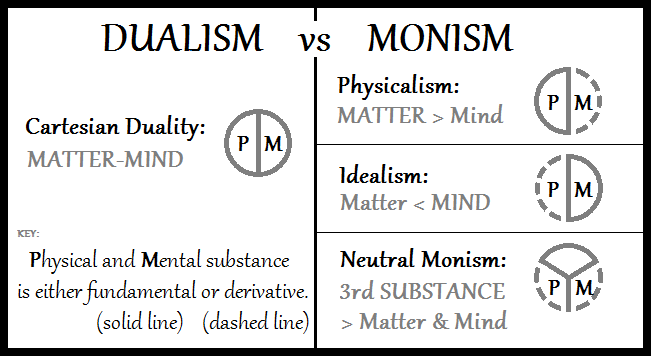
Each morning I receive emails of dharma snippets from respected gurus. There are dualist and monist viewpoints. My response to them is not unbiased!

The dualist believes in an authoritative outsider. The selfish self is contrasted with the selfless other. The Gods step in where parents feared to tread. Benign leaders wish me well. There is a sacred agency that cares about and protects me. Such beliefs lead to existential cop out and to reliance on myth and magic.

The monist appreciates the Oneness and the fact of InterBeing. There is blurring of boundaries between ‘things’. No beginnings or endings, only the eternal ongoing present. All being is just mind stuff. Blow away the clouds. Let the mud settle. Know the peace.

Someday the sun will go out. In the meantime the student is expected to work out his salvation with diligence.

I feel inclined to help. Is it the vocation calling? I could help make the world a better place by sorting out my own head such that I am in a better position to help others sort out theirs.

And then there might be ‘movements’ energised by changed minds. But I have no new insights to offer. There are spiritual and intellectual giants already pumping out new ideas. I could be a fellow traveller. My contribution would be in rephrasing so that more people are inclined to get on board the train.

I have slipped away from plain language. But that is OK. The first task is to understand. Once I am comfortable with the story line there will be thought about how to express it.

Tuesday, 26 March 2013

Pretentious Worldviews

Is it pretentious to imagine that I am on a spiritual path? I am one of Jock Tamson’s bairns. I was born, will live for a few years, and then die. So it is with all sentient beings – and even with the rocks and stones. If there is a beginning there will also be a middle and an end.

Impermanence is easy to realise. Your culture and language will teach you how to feel about it. Or perhaps it is a taboo subject because it is too upsetting to think about. Either way your ‘knowing’ is based on what your language recognises.

But language-based cultural containment can be challenged. If there are existing stories they can be rewritten and if there are gaps they can be filled. There is an ever present option to boldly go where no man has gone before.

As it happens, an illustrious few have boldly gone before and, in so doing, have provided proof of concept. They have shown that it is possible for individuals to realise the unreality of their culture specific worldview and, as a result, to survive and even to flourish.

It is like mud in water. With stillness it settles and there is clarity. As human beings we are hard wired to cope with impermanence. But the relevant genes are covered in monkey mind mud. If the mind is a sports car few people ever get it out of first gear. This is good for rulers.

Most rulers operate so as to “keep the peasants in ignorance”. People who think too much are dangerous. They might have thoughts that challenge the rulers. Thinkers are thus seen as insane revolutionaries and are dealt with accordingly.

But the skill set of the ruler does not of necessity include creative thinking. They employ advisors for that. Advisors are useful when they are innovative and generate new ideas that the rulers can use. In this case the thinkers are seen as sane evolutionaries and they are rewarded.

I was an advisor to government in the South Sudan, Belize and Lesotho. I was fastidious in not pushing my personal agenda. I facilitated national development processes by gathering and processing evidence and by preparing short briefing notes about how similar problems were tackled in different countries. Very few local voices were innovative. Key decision makers were interested in the standard modernisation package for ‘becoming like America’.

I have written elsewhere about my three chronological topics of interest – education development (especially curriculum), social development (plain language to promote participation in policy making) and then personal development (meditation as a radical means of unhooking from narrow cultural straightjackets).

With education development and social development I was a servile facilitator. I was at the cutting edge of official expertise and I promoted official and fashionable blueprints. The goal was to change other people’s minds

… Were these pretentious worldviews?


With personal development I am an active participant. I study the dharma (including modern western contributions) and meditate. The goal is that my mind should change itself and know peace . Interaction with like minds is welcome. I share ideas by blogging

… Is this a pretentious worldview?

Sunday, 24 March 2013

Sangha Sharing – heart and head

Sangha sharing involves a member presenting heartfelt ideas to the other members  who obviously listen but who do not respond and who are not expected to.

The process is called sharing and listening from the heart. It is interesting to compare this with what might be involved in sharing and listening from the head.

When the sharing and listening is from the head it begs for a spoken response. It then quickly becomes a discussion or debate and possibly a therapy session. The goal = to promote a robust sense of self. The truth is made by talking. (chat, counselling, psychotherapy, psychiatry.) This dialogical procedure can easily get caught up in the cut and thrust of debate and unhelpful dependencies can be established.

When the sharing and listening is from the heart there is no need of a response. The mental act of stringing words together causes the speaker to be witness to the issue rather than being caught up in it. This ‘distance’ is its own reward and, as a bonus, acts as affirmation of the goal which, in this case, is to appreciate the illusory nature of ‘self’. In the absence of responses from the listeners the speaker will reflect on her reality from her own perspective and come to know that her mind has a mind of its own. It gets progressively easier to drop off body and mind and to know the peace of no self.

Dumb Dharma

Retreat to a cave
I am beginning to realise what sages mean when they say that reality is unspeakable.  Mere words cannot do it justice. Dharma is dumb.

Language evolved to deal with practical matters like relationships, social status and the brainwashing of children. Language did not evolve to deal with those aspects of experience that are meta-cognitive, other-worldly and ‘spiritual’.

But truth/ reality/ the dharma can be known and experienced non-verbally by people who clarify their minds by stilling their mental chatter.

Language began to evolve about 100,000 years ago and it expanded to include an ever increasing range of worldly things - from stone axes to mobile phones.

Then, in the Axial Age (800-200BC), there were dramatic developments. Mystics and shamans became numerous and influential.  New ways of thinking led to new ways of organising people and controlling them. But, in most cases, ‘religion’ chummed up with politics and together they justified exploitation and war. The rich got richer and the poor got poorer. But all systems declined and fell and there was competition to take over the empty spaces.

But there were always a few mystics contemplating the infinite. They sat in remote caves and stilled their mental proliferations. They disciplined their minds and liberated themselves from their geo-historical happenstances. By giving up their culturally conditioned viewpoints and worldviews they became free souls in tune with the inbuilt but unspeakable dharma.

Our backyard
No matter where or when they were active they knew the peace that passes all understanding. From their various starting points they climbed the mystic’s singular mountain. At the summit, they invariably advocated for peace and happiness and for the practice of meditation. Meditation is the sure way for people to turn their minds around and thus to be liberated, enlightened and born again.

Each person born again as an enlightened being is a manifestation of the Cosmos being conscious of its consciousness.

We live in exciting times. This is the beginning of the 21st century on planet earth. There is a synergistic meeting of Eastern and Western viewpoints and worldviews. Is this a new axial age?

•    We are now potentially capable of guiding the direction of cultural evolution.
•    We are now potentially capable of developing new vocabulary and viewpoints.
•    Ultimate reality might soon be speakable.
•    Are we witnessing the end of dumb dharma?

Tuesday, 19 March 2013

Changing viewpoints


Clock Watching
The viewpoint at this moment (VATM) is that quiet sitting happens in response to dis-ease. If  there is peace of mind there is no urge to just sit. I am mindful ‘on demand’ rather than ‘by the clock’. 

The urge to sit was growing before that last paragraph began. But the paragraph prompted ‘flow’and sitting slipped from mind.

This makes an important point about thought moments and viewpoints. Neither has an abiding reality and this raises questions –

  • ·         Where does a viewpoint come from?
  • ·         How strong is it?
  • ·         How long does it last?
  • ·         Where does it go to?

How long does it last?’ Anything from a fraction of a second to a few minutes under normal circumstances. When in ‘flow’ it might last for a couple of hours. 

Where does it come from and go to?  The viewpoint passes in and out of up-front conscious attention. But it presumably ‘exists’ for long periods in the unconscious. For this to happen it might be stored in ‘memory’ from which it will be recalled from time to time to be involved in an unconscious, multi-module, mind-mapping exercise. 

How strong is it? Some viewpoints are more stable than others. When they are pulled from memory and mixed with contemporary inputs their relevance might still be highly rated.  Good ideas close lazy minds. But then again, “If it ain’t broke, don’t fix it.” 

Corridors of Power
So long as the environment is stable the traditional way of doing things can continue. If the viewpoint has survived long enough to become a tradition then it must have something going for it - and it will be socially reified and sanctified. Creative innovators will not be favoured in the corridors of power. 

But it is different when the environment is changing. Viewpoints will have to change to fit the new reality.  There will be initial resistance to change but, if the viewpoint and the social system are to survive, then the creative innovators will have to generate new viewpoints. Cognitive dissonance will enervate the culture for a while. Creative innovators will be favoured in the corridors of power.

>>>>> <<<<<

SO - That is my viewpoint at this moment (VATM). There was no awareness of what might appear when the writing began. 

In retrospect I recognize many of the ideas but there is a touch of creativity in the way they have been put together. 

In retrospect I also notice that I have avoided quiet sitting. There might be some now. I could think of sitting as a reward for being productive. 

Changing viewpoints – Yoh!

Monday, 18 March 2013

Questioning the changing mind


Things are not as they seem. “The reality that can be described is not the real reality.” Our world views constrain us. Sages suggest that we let them go. 

How is it possible for abstract thoughts and feelings (mind stuff) to make changes in the world of matter - and vice versa. 

snake or rope?
What is happening when you jump back terrified by a snake that turns out to be a piece of rope? What was happening when the artist came home drunk and was terrified by the picture of a tiger he painted on the wall before going out? 

 “All that we are is the result of what we have thought: it is founded on our thoughts, it is made up of our thoughts. If a man speaks or acts with an evil thought, pain follows him, as the wheel follows the foot of the ox that draws the carriage … If a man speaks or acts with a pure thought, happiness follows him, like a shadow that never leaves him.” (The Dhammapada)

What is the link between our changing mind and our changing brain? The following replies to the journalist’s six questions point in an interesting direction

Who is changing their mind? Everybody is changing their mind all the time. There are inputs from the sense organs which are continuously compared with memories so as to figure out, from thought moment to thought moment, what actions to take. The filters on the rating process are rooted in nature, nurture and serendipity.

Why should someone change their mind? There is no option. The monkey mind is continuously scanning the external and internal environments with a view to avoiding the undesirable and embracing the desirable.

Brain modules
What is involved in changing minds? In the brain there are many interacting modules whose purpose is to figure appropriate automatic reactions and mindful responses to changes in the internal and external environments. 

When do minds change? A mind is in a constant state of flux even when asleep. The up-front conscious ‘I’ can experience thoughts and feelings which are ‘felt’ to last for seconds through days to lifetimes. But such impressions on the conscious mind are but fleeting shadows linked to the illusion of an abiding ‘self’.

Where do minds change? A ‘mind’ is associated with a brain. Psychological states have neurological correlates. There is no mind change without brain change. But the brain is part of a body that has other parts associated with the stimulus/ response process. For example there is the poetic notion of a change of heart. “The heart has its reasons that reason knows nothing about.” (Blaise Pascal)

How do minds change? A change of mind correlates with a changing pattern of interacting modules in the brain. Recent brain scanning research has shown that, in some cases, decisions to act are made unconsciously up to a second before the conscious ‘I’ gets to know of it. The conscious mind has an unconscious mind of its own!