Saturday, 23 February 2013

Toilet gatha


My stools are presently long, thick and well coloured. I look in the pan to check. There is joy in seeing them in such good shape. 

I appreciate that they are what remains of the plants and animals brought to the Coop in Portsoy from many parts of the world. 

They passed through my nutrition system. Now they are headed for the sewage treatment plant. 

Interbeing. Constant change. The impermanence of all created things. Nothing comes from  nothing.

Thursday, 21 February 2013

Meditation: It's a Revolution - �The Way of Meditation

Meditation: It's a Revolution - �The Way of Meditation

The Way of Meditation has the potential to be a catalyst and driving force behind revolution in many areas of life. Meditation teaches the skills and attitudes which oppose and counteract the prevailing forces of authority and inequality of our time and offers sustainable peace and freedom.

Wednesday, 20 February 2013

Should 'real' students do an online course on the side? | Education | guardian.co.uk

Should 'real' students do an online course on the side? | Education | guardian.co.uk
The MOOCs

Repetitive rants


Most of my more recent rants have been saying the same thing. But this is not a problem. Repetition helps to consolidate the message and thus encourage the practice. Writing the stories is a cognitive equivalent to reading the short daily dharma quotes that arrive in my email and on Facebook . 

repetitive and reinforcing
But old habits die hard. It is easy to slip out of mindfulness and to have the mind racing. These days I am less prone to anxiety and panic attacks and, when they begin, I notice them. This helps to defuse them.

The good news is that restlessness and anxiety are less than they were. The not so good news is that sloth and torpor are more than they were. When meditating and when reading I tend to dose or sleep. But there is no need to feel bad about this. It is just a phase. And anyway, I stay awake when writing and this is usually a non-egoic process. 

These days loads of stuff happens without rational and conscious control. Time is spent calmly noticing the stuff entering and leaving the attention centre. Sometimes a few ends tie together, non-egosity kicks in, and a story appears. This absent minded state can last from a few minutes to a few hours. 

‘I’ expect another paragraph to appear to round off this rant. ‘My’ task is to keep the ego quiet so that stuff from the unconscious can be noticed. BUT, if the system fails, ‘I’ can revert to plan B which is to choose a wisdom book at random and pick a pertinent quote.


“We are dealing with the deepest forces in the mind, and epiphany is seldom immediate.” -  Henepola Gunaratana

Monday, 18 February 2013

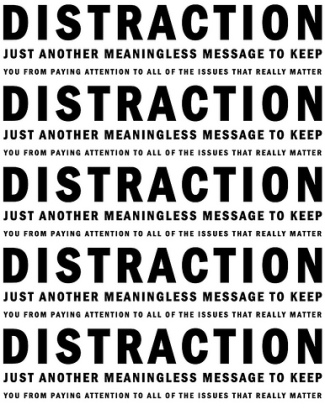
Distraction

Distractions are mind states that occupy attention and lead towards good things and away from bad things.

On the good side they prevent boredom; they are benign and help you to lose your ‘self’ and to relax. A glass of wine and watch a movie. Make it easy on yourself.

On the negative side distractions are an existential cop out; a failure to face life’s seeming lack of purpose. They promote restless busy-ness and workaholism such that there is no time to stand and stare or to have quality time with the family. Make it busy on yourself.

There are fashion industries for distractions. The PR and spin merchants create obsessions and addictions to niche marketed status symbols for the young, old, male and female. Electronic gadgets, sports gear, alcoholic beverages, foreign holidays etc. Bread and circuses.

Your attention centre might close down during deep sleep but it is active during the waking hours. It may not be immediately obvious but it is possible to choose what occupies it.
In terms of basic survival, attention has to be paid to lions in the Savanna, trucks in the High Street and pick pockets in the shopping mall etc. But, in our modern cultures, with food shops, effective policing, and labour saving devices, there is plenty of time left over to do constructive things with the attention centre.

And what is the most constructive thing you can do with your attention centre? Be still and avoid distractions. Pay attention to your breath coming in and going out. When attention wanders, as it surely will, then bring it back to the breath. Let go of the worldly chatter about distractions and get to know the clarity and peace that is the true nature of the undistracted mind.

“I got in and started the engine, also turning on the radio. When the music began I wished that there might be more switches to turn on, for it was somehow not enough.” ― Saul Bellow, Humboldt's Gift


Unspeakable but knowable


The dharma story is deceptively simple. Quieten the mental chatter and the compassionate, non-egoic peace will be cut loose. The non-egoic peace is the natural state. It is hard wired into the nervous system and has been part of the human condition for millions of years. We share this foundational mind state with other animals. 

cerebral cortex
BUT … in more recent times, in humans, the cerebral cortex expanded and language and self-consciousness evolved. In the beginning there would not have been many words. But they would have been used to label the patterns and agencies that appeared notable and useful to our language building ancestors. Nurture (learning and reasoned response?) began to override nature (instinct and robotic reaction)!

BUT … man is a social animal. Much of the early language would have been about human relationships and interactions. Patterns of supposed cause and effect would have emerged. There would have been discussion and debate which selected the fittest concepts and words. Some of the ideas withered away while others flourished. Once the process was set in motion, cultural evolution was quick to follow. 

hunting and gathering
Languages began during the days of hunting and gathering. They helped make the change to settled agriculture and thus to city states, empires and nation states. These economic systems created more food than the individual farmer needed to support their family and this enabled the creation of social roles other than farmer. 

As the division of labour developed many jobs and professions were created. These would have included kings, priests, and businessmen; craftspeople and money lenders; sages, shamans, and soldiers; poets, policemen and prostitutes; and many more.

At a more intimate level there would have been roles for husband and wife; and for children and their parents. Various patterns evolved. Note that, in the absence of a welfare state, larger and more extended families are the rule and that an African proverb reckons that “it takes a village to grow a child”. 

Human cultural evolution has created many complex, fast-moving life styles. Language has fired that growth. Many stories have been imagined and told. ‘Patterns’ are identified and ‘agents’ are hypothesised based on metaphors from the human condition. (eg God the Father). 
 
god the father
Many stories are egoic because of how language has evolved. There are me and them stories; them and us stories; I, me and mine stories. The minds of most modern, capitalist consumers are filled with endless chatter using concepts and words that provide viewpoints and world views that promote parochialism and xenophobia. Nurture (the spoken) eclipses nature (the unspeakable).

But the unspeakable is knowable. When the mental chatter is allowed to settle the compassionate, non-egoic peace is cut loose. The non-egoic peace is the natural state. It is hard wired into the nervous system and has been part of the human condition for millions of years. We share this foundational mind state with other animals. It is our birthright.

Be still and know.

free market fundamentalists

Slavoj Zizek
Why the free market fundamentalists think 2013 will be the best year ever | Slavoj Žižek | Comment is free | The Guardian: As communists once did, today's capitalists blame any failures on their system being 'impurely' applied

The Purpose of Mindfulness

Sharon Salzberg
Mindfulness allows us to watch our thoughts, see how one thought leads to the next, decide if we’re heading toward an unhealthy path, and if so, let go and change directions.

- Sharon Salzberg, "Mindfulness and Difficult Emotions"


http://www.tricycle.com/online-retreats/mindfulness-and-difficult-emotions

Sunday, 17 February 2013

first dealings


Thich Nhat Hahn

“Given the difficulty of convincing those with vested interests to change their behaviour, Thay says a grassroots movement is necessary, citing the tactics used by Gandhi, but insists that this can be effective only if activists first deal with their own anger and fears, rather than projecting them onto those they see at fault.”

Tuesday, 12 February 2013

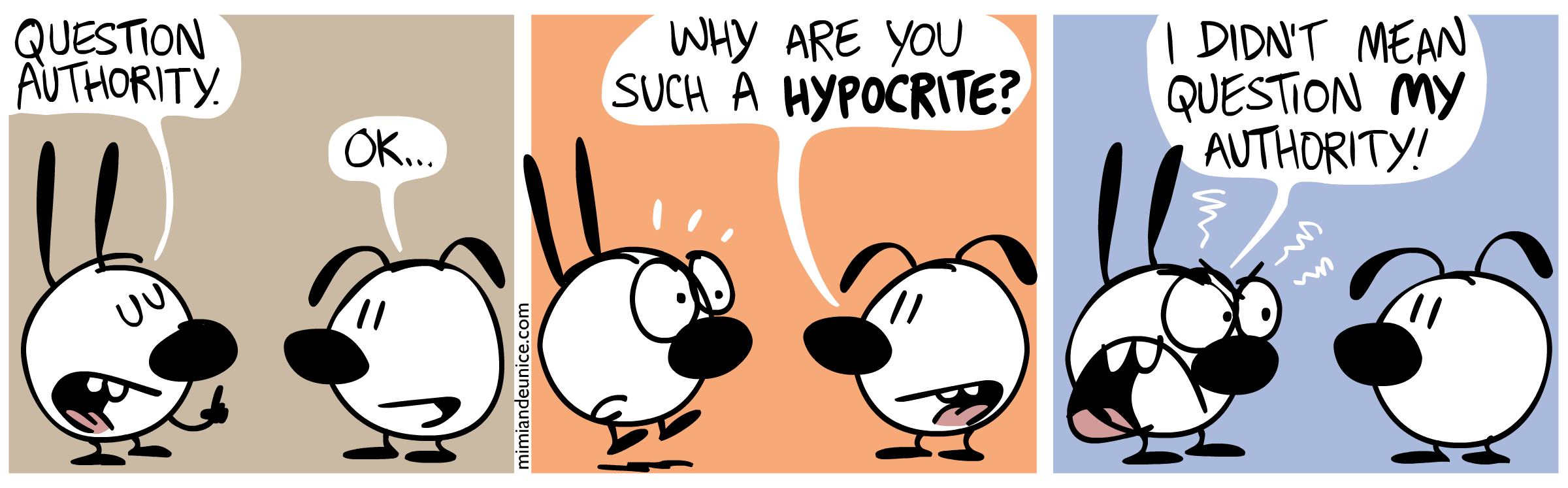
Weber on authority


Max Weber
Max Weber divided legitimate authority into three types:

The first type discussed by Weber is Rational-legal authority. It is that form of authority which depends for its legitimacy on formal rules and established laws of the state, which are usually written down and are often very complex. The power of the rational legal authority is mentioned in the constitution. Modern societies depend on legal-rational authority.

Government officials are the best example of this form of authority, which is prevalent all over the world.

The second type of authority is Traditional authority, which derives from long-established customs, habits and social structures. When power passes from one generation to another, then it is known as traditional authority. The right of hereditary monarchs to rule furnishes an obvious example.

 The Tudor dynasty in England and the ruling families of Mewar, in Rajasthan (India) are some examples of traditional authority.

The third form of authority is Charismatic authority. Here, the charisma of the individual or the leader plays an important role. Charismatic authority is that authority which is derived from "the gift of grace" or when the leader claims that his authority is derived from a "higher power" (e.g. God or natural law or rights) or "inspiration", that is superior to both the validity of traditional and rational-legal authority and followers accept this and are willing to follow this higher or inspired authority, in the place of the authority that they have hitherto been following.

Examples in this regard can be NT Rama Rao, a matinee idol, who went on to become one of the most powerful Chief Ministers of Andhra Pradesh.


History has witnessed several social movements or revolutions, against a system of traditional or legal-rational authority, which are usually started by Charismatic authorities.
Weber states that what distinguishes authority, from coercion, force and power on the one hand and leadership, persuasion and influence on the other hand, is legitimacy.

Superiors, he states, feel that they have a right to issue commands; subordinates perceive an obligation to obey.

(See also the concept of Hegemony (ref Gramsci) and of elegant power